Redactioneel
Essay
The Continental R
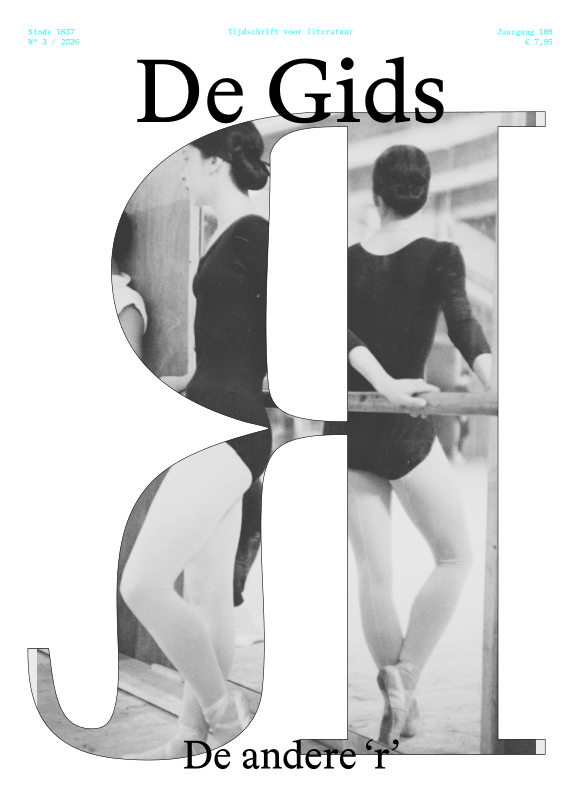
In English, how you pronounce the “r” should reveal where you’re from. My linguistics colleague asks me to say “carpark” aloud in front of students. “Carpark,” I say. “I’m parking my car in the carpark.” I’m told I said it wrong for an American.
My colleague is Dutch, so I don’t care what they think about my English. They think they speak British English and say, “Cahpahk.” I think they speak a Dutch-person-trying-to-sound-British English, but I don’t think they say “carpark” wrong. But maybe I wouldn’t know, since I would never say “carpark” anyway. It’s a “parking lot” or a “parking garage.” No one has ever told me I said those wrong.
In Korea, they hear my American accent and tell me my tongue has been “bent.” In Korea, there are special classes on how to pronounce the English “l” and the English “r.” In Korean, there is only one consonant that falls somewhere in-between, the “ㄹ”. To me, this Korean “l” or Korean “r,” depending on how you want to see it, looks like a tongue folding onto itself, a tongue that can say everything and nothing. It’s a lyre snake, trapped in the hood of a car in a carpark, ready to strike. But at what? How would a poet in Korea say “lyre?” How would a poet in Korea say “lyric?” They wouldn’t be wrong, or they would be as wrong as any poet in America or here.
In Korean, the “ㄹ” lies somewhere between the “l” in the Dutch word kaal and the “r” in the English word car, unless you are English, Welsh, Australian, South African, from New England, New Orleans, and so forth, in which case you bend your tongue a certain way but don’t pronounce the “r” at all.
In Dutch, my daughter’s teacher tells me she needs to go to a speech therapist because she can’t pronounce de continentale r. I’ve never heard of “the continental r” before and google it and get websites about a type of Bentley produced in the ’90s. Would she ever have to say anything about this car model anyway?
“In speech therapy, what do they make you do?” I ask my daughter. “First you do a lot of engaging games,” she says. “Engaging games? Is that what they are called?”
I interrupt. “No,” she says, “that’s just what I call them. I think they are engaging.”
She likes that she wins points, and then she gets cake. Her therapist never tells her she’s wrong, but she rewards her for being right.
First game: make the Dutch “gggggg” noise in your mouth and gradually transform that into an “rrrrrrr.” But as soon as the tongue gets involved with the “r,” it won’t work for me. My tongue is too bent. It’s spent too long negotiating between the “l” and the “r,” it refuses to stay out of this new relationship with “g.”
Second game: Put water in the back of your mouth and gurgle. Now imagine doing that without the water in your mouth and saying a bunch of different words with “r” in it. “Like what?” I ask her.
In Dutch, my daughter tells me, the continental r lies somewhere between the ‘g’ and drowning. 
r-aantal: 146

Uit:
Nummer 3/2026
Lees verder
Essay
De (ai)R komt met een hoge prijs
Poëzie
We kwamen elkaar tegen en we brachten de klank voort
Essay
Hé, zeg eens [r]
Poëzie
Gedichten
Beeld
Beeldbijdrage
Poëzie
hove r c r aft
Beeld
Beeldbijdrage
Essay
De r als sjibbolet
Essay
Ik heb mijn vaders stem
Polarisatie, oorlog en samenleven
Tribalisme en de kleine filosofe
Beeld
Beeldbijdrage
Verhaal
Transcript van het gezegde in afwachting van het ongezegde
Poëzie
Gedichten
Essay
Limbo
Essay
Twijfelen over België
Poëzie
Blauwdruk
Essay
De ficties van Edward Said
Verhaal
Queen of Sales
Essay
Witte jas
Stripverhaal